
REAL vs Fake
The ultimate goal for Entertainment Venues is to create the best out of home places where Real Humans can gather together in-person to socialize with their REAL friends, family, as well as members of their Community to share REAL experiences Face to Face.
Definition of REAL experiences Face to Face:
In-person experiences that enable humans to gather together to socialize, play, laugh, eat and drink, and bond – unobstructed by devices or any other technology that causes separation or inhibits face to face connection – virtual or otherwise.
In order to make it easier for our guests to socialize, we need to provide them with the very Best Gathering Spaces, Best Social Gaming and Attraction Experiences, along with Real-ly Good Food and Beverage.
Yes, it’s important to offer our guests REAL (not digital) Food and Beverage. After all, who is going to pay us for a fake digital beer or chicken wings? Answer = NOBODY!
If the fake digital beer or chicken wings example seems ridiculous, then it should seem just as ridiculous to provide our Real Human guests with gaming or attraction experiences that are fake or restrict their ability to fully connect as human beings with their friends, family, and members of their community.
Real Human Connection (not Fake)
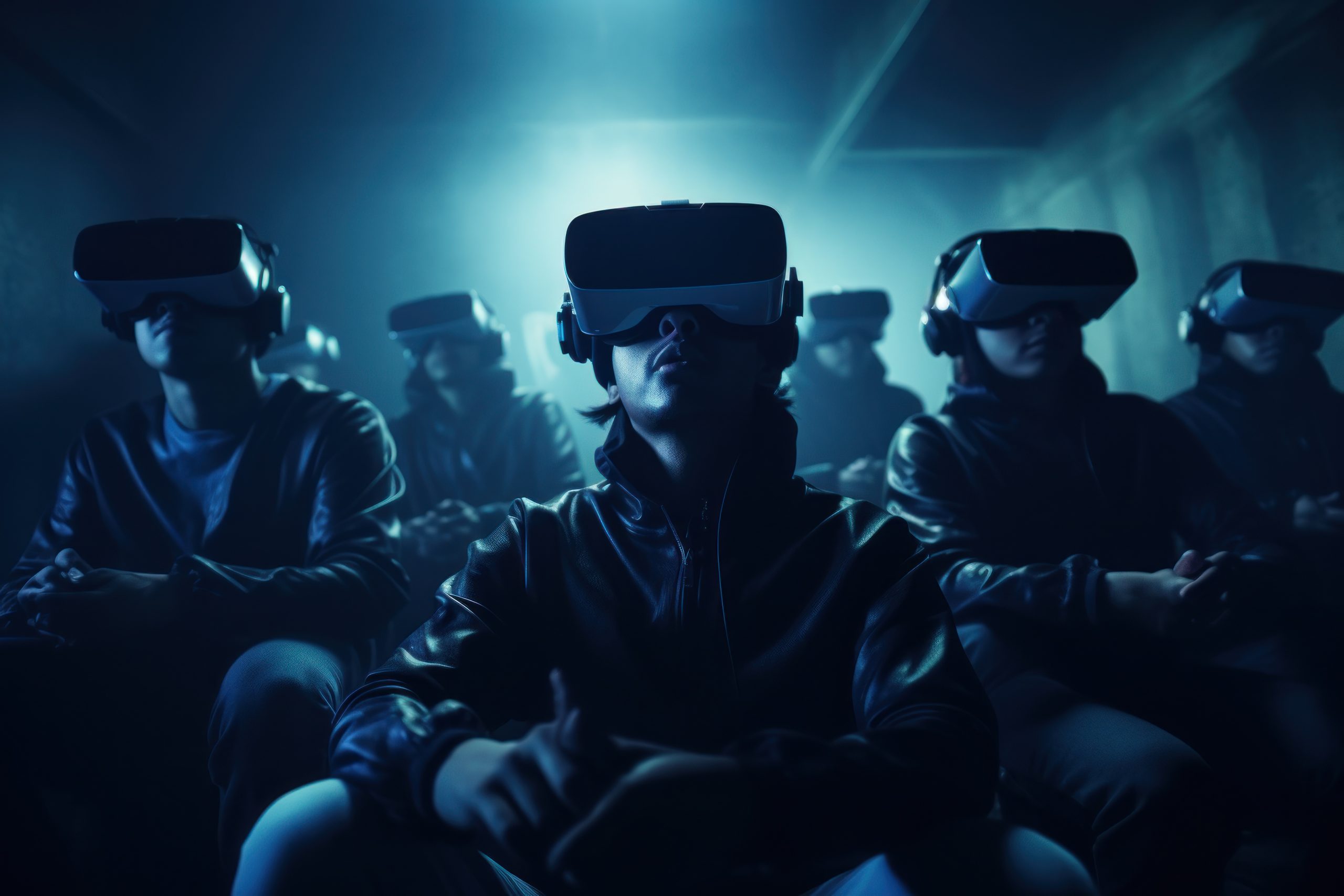
In a world overrun by fakeness, the best and most successful out-of-home Entertainment Venues will be the ones that provide their guests with REAL Face to Face opportunities to connect with other humans while experiencing the best Social Gaming and Attractions and sharing real good food and drinks together.
We want our guests to see everything that is happening while playing our Social Gaming and Attraction experiences as well as to be seen by their friends, family, and the people who make up their communities.
Maximizing REAL physical presence elevates both the verbal and nonverbal communication opportunities. For example, a barely perceptible nod or a wink between a teammate, friend, or even a stranger can mean a lot and sometimes even more than words. The same goes for fist bumps and high-fives.

The ultimate goal is to create social experiences that help each member of a group to feel a sense of belonging. Having a shared sense of belonging is a powerful human NEED that doesn’t happen often enough.
If we provide our guests with a variety of the best Social Gaming and Attraction experiences that are designed to maximize in-person, human connection, we will be able to draw more people away from their digital screens and into our out-of-home social venues.
All of our out-of-home entertainment venues are competing against all of those mobile and in-home digital screens, including VR devices, which are intentionally designed to be highly addictive.
Short videos, games, etc. are engineered to repeatedly inject dopamine hits into each user’s brain through their eyeballs. These digital screens can essentially paralyze users for hours upon hours every day, this digital paralysis is often what keeps them from visiting our venues more often.
Technology – The Good, The Bad, and The Ugly
Too often, we get mesmerized by the shiny new object. So much so, that it blocks our ability to see just how bad the NEW THING is to the short, medium, and long-term success of our out-of-home entertainment venues. It’s unfortunate, because these new attractions that are ultimately harmful to all of our businesses keep us from focusing on what is truly 10x BETTER for the success of our out-of-home entertainment venues.
For example, VR evangelists keep preaching that VR is just about to become a key ingredient in the salvation of our out-of-home entertainment industry, but the reality is that VR has been trying to become the new successful thing for over 25 years.
VR is NEVER going to be the savior or even a small part of the long-term success of out-of-home entertainment, because its fundamental design restricts the ability for humans to connect at a high level.
Spending time and money on VR is a waste of resources and it’s a distraction that keeps us from focusing on the things that will truly separate our out-of-home entertainment venues from in-home entertainment and all other forms of digital entertainment.
If VR ever gets to be something bigger than tiny, it will simply be another digital screen people use in their homes, which ultimately makes it another in-home competitor to our out-of-home entertainment venues.
There are already multiple devices that enable in-home, VR players to physically move around in a VR game – these devices are only going to get better and cheaper.

The reality is that VR is the opposite of Social. In fact, VR could easily be the digital poster child for all things that are anti-social.
That doesn’t mean all two letter acronyms are bad for out-of-home entertainment. For example, AR (Augmented Reality) can be used to enhance REAL “Face to Face” Social Gaming and Attraction experiences. But, only when these AR enhancements enable humans to connect and bond in-person at an even higher level. It’s important to note that I’m not talking about Augmented Reality glasses, which actually inhibit Real human connection.
Good Augmented Reality (AR) is anything that helps to augment or maximize REAL Human Face to Face connections.
Human Centered Game Design

One of the biggest problems with our out-of-home entertainment industry is that we don’t spend enough time and money on FULLY developing the best Social Gaming and Attraction experiences – ones that can take full advantage of our guests’ built-in, human, biological hardware, and software interfaces.
By the way, good enough NEVER IS! When we identify a possible improvement, we have to test it out. If it really is better, we have to make the changes or upgrades needed to provide our guests with the best possible experiences. It doesn’t matter how much we have already invested – if we don’t continuously make the tough decisions to always get better, it’s unlikely that we are going to be around long term. Worst-case scenario, start incrementally, but freaking start NOW!

10x Capabilities
The KEY is to utilize all the 10x capabilities that are already built into the human body. It’s these human capabilities that enable our guests to more fully connect as humans while playing our Social Gaming and Attraction experiences.
Human Body (i.e. Feet, Legs, Torso, Shoulders, Arms, Elbows, Wrists, Hands, Fingers, Neck, Head, Eyes, Ears, Nose, Skin, and Brain)
These extremely versatile biological mechanisms are used by our human guests to experience our REAL Social Gaming and Attraction experiences.
In fact, after winning a round of Axe Throwing or Krazy Darts the winning team is able to use their biological mechanisms (shoulders, arms, and hands) to give each other REAL high fives (not a fake digital simulation of a high five).
It’s our guests’ physical bodies that walk into our REAL out-of-home venues that enable them to have truly human experiences. Whether it’s playing a game of laser tag, participating in a Social Gaming experience like Axe Throwing, Bowling, Duckpin, Pickleball, Krazy Darts, etc., it’s all about enabling our human guests to use their human bodies to play, laugh, socialize, and ultimately BOND with each other.
It’s important to note that humans who regularly use their human Feet, Legs, Torso, Shoulders, Arms, Elbows, Wrists, Hands, Fingers, Neck, Head, Eyes, Ears, Nose, Skin, and Brain are able to maintain and even increase their physical and mental well-being – especially through varying forms of physical movement.
Important note, physical movement helps humans to release beta-endorphins and endocannabinoids, which help to reduce both stress and anxiety.
Do you think our Human guests might be interested in reducing the stress and anxiety that exists in their daily lives as well as their friends, family, and coworkers?
Dopamine is another chemical when triggered causes us to want more, but it doesn’t always produce the best outcomes. In fact, when dopamine is triggered too often, it can cause lots of really negative problems. It can cause relationships to end, deepen depression, as well as inflate feelings of anxiety. The only purpose of dopamine when triggered is to motivate us to want more, more, and MORE!
That’s why the most successful social (more accurate anti-social) media platforms provide a never ending stream of content to keep their users forever distracted and addicted.
These companies design their products to trigger the release of dopamine, which keeps humans hooked and wanting another hit and then another. They do this by showing their victims a never ending stream of short, stupid videos, never-ending news streams or posts, providing them with addictive games, or any rabbit hole that keeps them lost on their devices or their anti-social media platforms.
And again, what keeps people addicted to their digital screens is the never ending stream of well crafted triggers that release another, and then another, and then another hit of dopamine, which locks them into WANTING to watch ANOTHER stupid video.
The last thing these companies want to see is the creation of out-of-home venues that are purposefully designed to enable humans to connect in-person with each other at a higher level – especially in ways that enable them to physically play games while socializing with friends and family in the same space.
To repeat, playing games with friends and family that require physical activity can trigger the release of beta-endorphins and endocannabinoids, which actually reduce feelings of depression, anxiety, and loneliness.
By creating the best out-of-home venues that provide our guests with the ability to play truly fun and entertaining Social Gaming experiences with their friends, family, and coworkers, we enable them to maximize their ability to connect with each other.

We also need to provide our guests with lots of opportunities to eat and drink while playing and socializing. Eating and drinking together is another natural human interaction that needs to be done more often if we want to maximize our guests’ ability to bond with each other.
These shared, in-person human experiences enable our guests to experience a feeling of belonging. This sense of belonging is a critical human need that is often in very short supply and CANNOT be replicated digitally to achieve the same outcome.
Now, back to some of the key biological human tools that truly enhance our human experiences and make our lives worth living!
Human Eyes
In order to visualize our three-dimensional, high-definition, out-of-home entertainment environment as well as our Social Gaming and Attraction experiences, our guests come equipped with built-in optical devices called eyes (i.e. no isolating or possibly germy VR goggles required).
Our human optical devices, which are built into two sockets just above and on either side of our olfactory organ (i.e. nose), enable us to see the world three-dimensionally and in full color. In fact, the human combined viewing angle of both our eyes is 190 degrees, which is wider than Virtual Reality (VR) goggles.
VR = Bad Human Experiences – The worst part about VR is that it takes us out of the REAL World and puts us into a non-human, fake world.
It’s important to note that our built-in human optical devices work dramatically better at connecting us to other humans. In addition, our human eyes don’t make us sick when moving around in our real world as opposed to a fake one. VR can also cause headaches or goggle fatigue, which happens with a high percentage of humans when they participate in a VR experience.
One of the really important things our human eyes can do is quickly perceive the emotional state of our friends, family, coworkers, or the people who make up the communities we live in by simply looking at their faces and body posture.
Since human socialization and connection is so important to a human’s emotional wellbeing, our human eyes are critical, because they help us to socialize and connect at a much higher level. Covering our eyes with any type of device reduces or blocks our ability to socialize at the highest levels possible.
One of the biggest advantages of our out-of-home entertainment venues is our ability to provide our guests with Gathering Spaces, Social Gaming & Attraction experiences, as well as Great Food & Beverage service to help them more easily connect and socialize.
So, WHY would we put our guests in any type of experience that restricts their ability to SEE and communicate at a higher level with their friends, family, and coworkers???
It’s INSANE that we would do anything to restrict our guests’ ability to socialize Face to Face.

But, THAT IS the goal of mobile and in-home entertainment devices. They want to capture the attention of as many human eyeballs as possible all day everyday. Their goal isn’t to connect humans, it’s to infect their brain in a zombie-like, paralyzed death grip to sell them more stuff or to keep them stuck on their platform ALL the time.
If we don’t provide our guests with dramatically better out-of-home gathering spaces, with the very best Social Gaming and Attraction experiences, and Good Food & Beverage service that enables them to want to gather and bond at a much higher level, then WHY would they even bother to leave their homes or look up from their devices to go to our venues with their friends, family, and community?
Ears
Our ears detect audible sound waves – such as human voices. Our ability to hear another human talking is how we begin the process of communicating and socializing.
Listening with our ears is a very important part of socializing. It enables us to more fully understand what people are saying and how we can best respond to the information they are communicating. In fact, if we listen closely enough, we may be able to hear that they aren’t telling us the whole story.
Listening and being listened to is a crucial part of human communication – it’s the starting point of figuring out how to understand what our friends, family, and coworkers are actually trying to say.
Using our ears to listen more deeply is one of the ways that enables us to socialize at a much higher level and ultimately bond with each other.
Nose
The human nose is another very important built-in device that helps humans to maximize socialization. Whether it’s from a woman’s perfume or a man’s cologne (or at least a nice smelling deodorant). There are also these things called pheromones that might actually have an effect on who we are attracted to.
From a revenue standpoint, the nose helps our entertainment venues to sell more food.
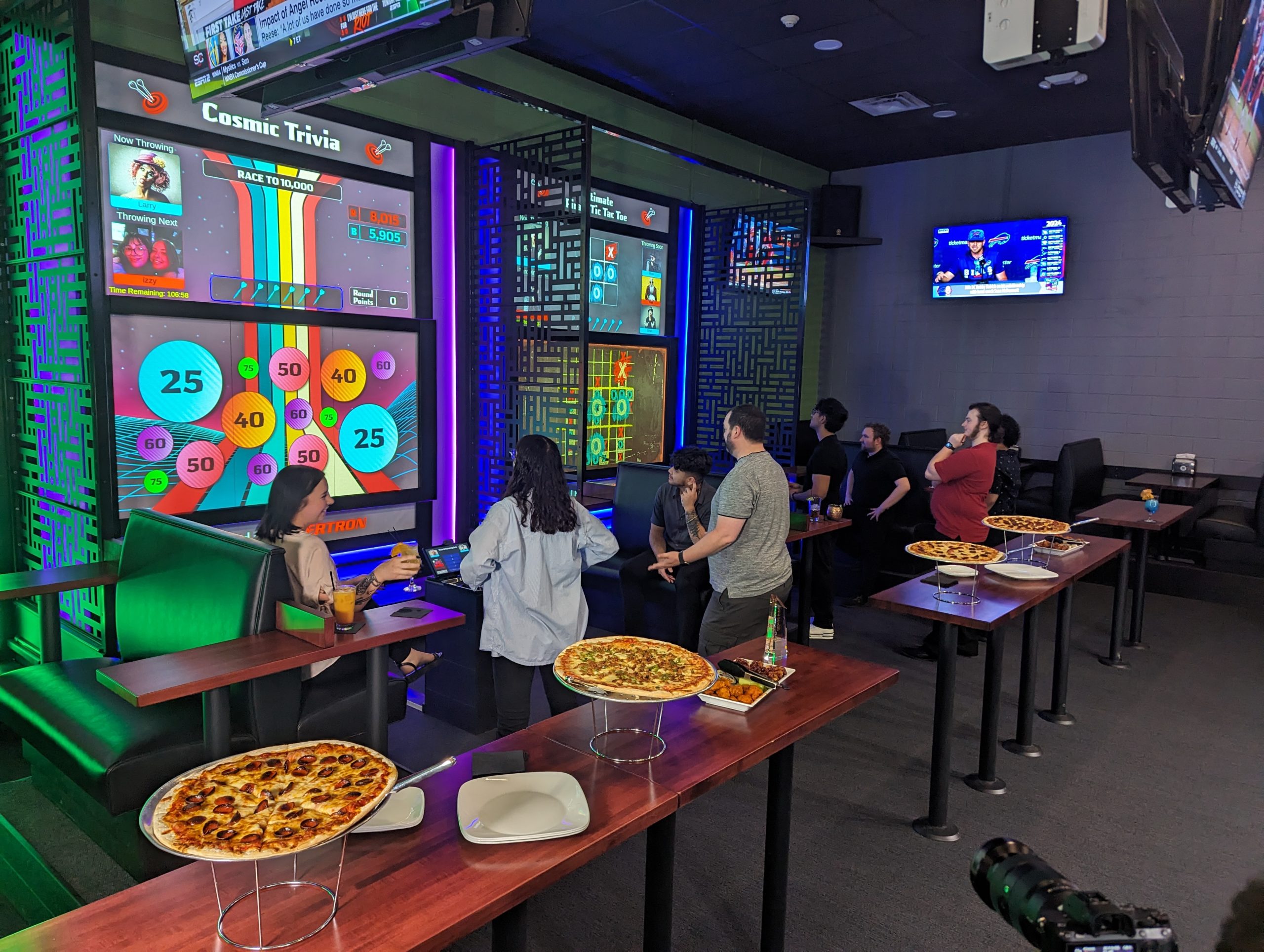
Once our guests catch the aroma of a fresh baked pizza coming out of the oven, it triggers their need to eat. Once a group is delivered their pizza and a round of drinks, other guests will want their own food and beverage.
Vocal Cords
These communication devices allow humans to communicate with other humans while playing a Social Gaming experience or an Attraction. Talking to other humans is obviously a key ingredient for socializing and ultimately bonding with our friends, family, and neighbors.
Our vocal cords are used to tell stories about what is happening in our lives today as well as the past. Our stories often talk about the challenges we encountered that day, week, or year and how we overcame them or at least how we persevered to live another day.
The sharing of stories helps us to realize we are not alone in dealing with all kinds of challenges and disappointments. We learn from sharing our stories that we are not alone in the challenges we face and most importantly that we too will overcome or at least persevere through a difficult time.
Sharing stories while socializing enables us to become better people by being there for each other, providing encouragement, and showing some empathy.
Human Tactile Sensors
Human skin is used to sense or feel things in our real, out-of-home only attraction environment. It’s our haptic feedback system that we use for high fives, fist bumps, a touch on the shoulder, a pat on the back, a hand shake, or a hug.
We use ALL the above physical tools to more fully Socialize out in the REAL World and to ultimately bond at a higher level with our friends, family, and the people who make up the communities we live in!
Recognizing Social Cues
Our ability to detect and decipher Human Expressions and Emotional Cues using our Human Eyes and Ears is critical when it comes to our ability to communicate and socialize (i.e. smile, frown, surprise, anger, laughter, raised eyebrows, a familiar face, a stranger’s face, body language, happy sounding voice, angry voice, excited voice, quiet voice, silly voice, and more).
These facial expressions, body posture, and auditory cues are easily picked up using our unobstructed human eyes and ears and can be quickly translated into useful feedback using our onboard human CPU (i.e. brain).
As an example, look how much information a simple emoji face can communicate 😃 😡 😭 🥳 🤔 😥 or hand gestures 👍 🖕👋 ✌️or heart emoji ❤️ 💘 💔. A simple emoji can instantly evoke happiness, concern, or even anger. The human brain has evolved to use our human sensing devices to quickly and effectively perceive another human being’s state of mind so we can better communicate.
If we want to draw more people out of their homes and into our entertainment venues, we need to do a much better job of helping our guests to use their built-in communication tools. And, that’s why we don’t want to inhibit their ability to socialize by using technology that blocks their ability to communicate with their friends, family, and coworkers.
Teams Are Better Than Pitting Everyone Against Everyone
The key to a great out-of-home experience is designing fun out-of-home gaming experiences that fully engage humans to work together as a team while competing against one or more teams made up of friends, family, or coworkers while using their human eyes and ears to communicate, encourage, celebrate, and bond with their teammates.
Multiple, short games played back-to-back also give teams multiple opportunities to learn, strategize, and win together. Exciting, competitive games produce a rush of adrenaline along with the opportunity to improve each player’s skill level. Teammates want their team members to do well, because the better they all do together as a team the more likely they are to win. They encourage and congratulate each other when they improve or get a great score. None of the benefits of playing on a team are possible if it’s everyone against everyone.
When the game is over, the goal is to help our human guests bond and interact with their teammates as well as the rest of the teams who make up their group. The goal is NOT to compete – it’s to use the gaming experience to make socializing more fun and easier to do.
These gaming and bonding rituals trigger chemical reactions producing serotonin in the body, which helps to manifest a feeling of belonging.
Enabling the fulfillment of these human needs through highly social gaming experiences helps to reduce stress, anxiety, and can help to bond a group more closely together.
By the way, a team made up of friends that are competing against another team of total strangers is not always a good idea. If the competitiveness of one team or both is high, then the likelihood of a bad gaming experience is much more likely than playing against an opposing team that is made up of your friends, family, or coworkers. This is why leagues and tournaments are more often a BAD idea than a good one.
In Summary
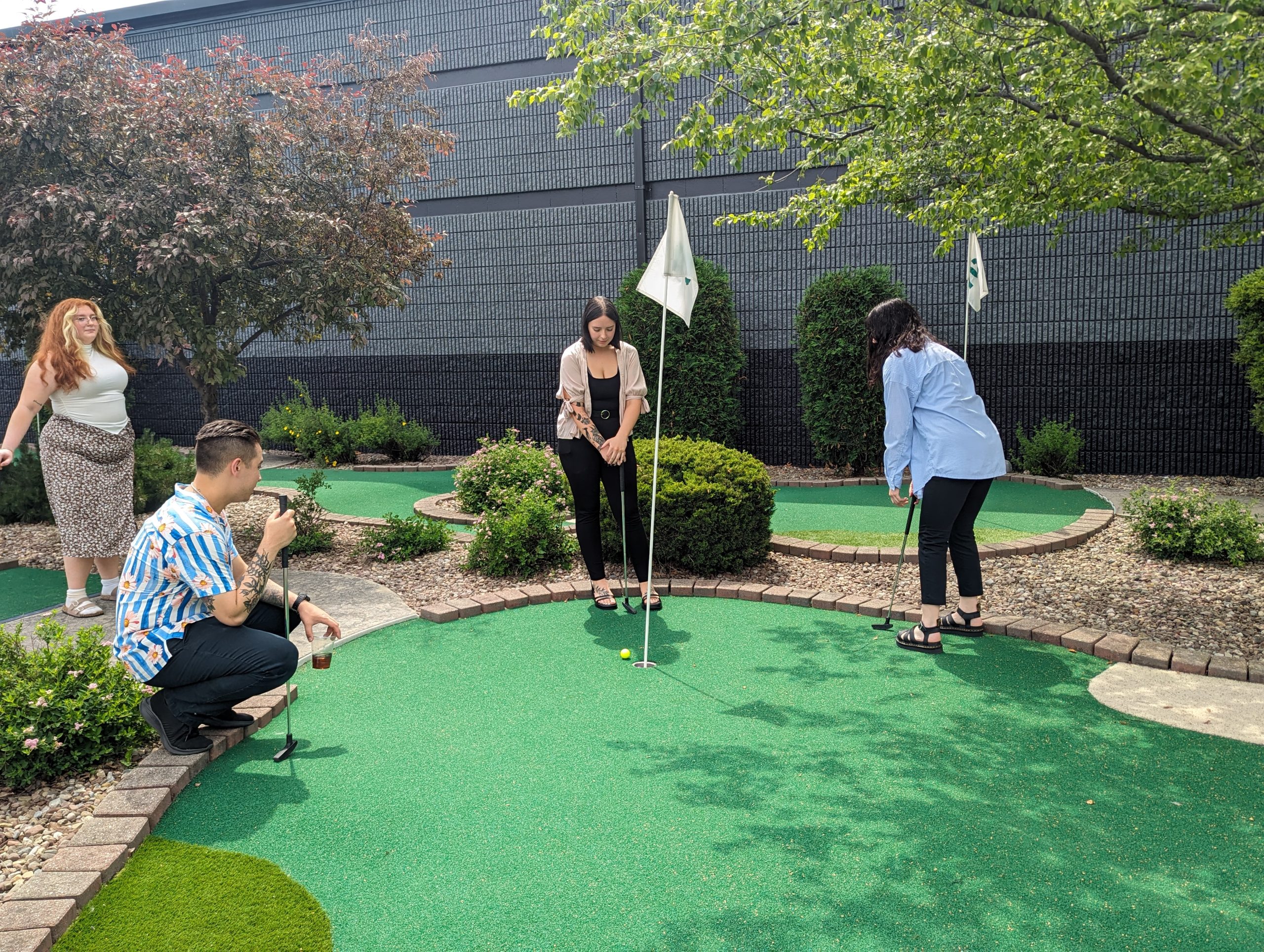
Playing or Participating in REAL, out-of-home only Social Gaming and Attraction experiences is all about sharing REAL, in-person experiences with REAL human beings from our community – not playing in an artificially simulated world with artificially simulated avatars (i.e. maybe humans or maybe just AI).
Many forms of digital entertainment and online social networks are trying to replicate social experiences. Fortunately for us, out-of-home social gaming venues with real Social Gaming and Attraction experiences are the one thing digital gaming and Social Networks are HORRIBLE at replicating and they will NEVER be good at it. As soon as they put a layer over the top of a potentially real human experience, they make the experience less human.
Ultimately, both virtual reality and most augmented reality developers are building their social gaming experiences on a foundation of fakeness instead of maximizing the REALness that makes a human being’s life more connected with their friends, family, and community.
The reality is that these creators of fake social experiences are causing as much mental and physical damage to our human society as a MILLION crack dealers on a MILLION street corners – the harm is 100% real – it just works a bit slower than smoking crack.
The hope is that the topics discussed in this article will help us to more fully understand how we can create the best Human-Centered out-of-home entertainment venues with the best Social Gaming and Attractions experiences that humans crave and ultimately need to survive and thrive!
We do this by creating the best in-person, Social Gaming and Attraction experiences that maximize our Guests ability to interact, connect, and bond with their friends, family, and the people who make up their community.
Thanks for reading!
Jim Kessler